
5-Axis CNC Machining Services: Verifying Complex Surfaces Across an Ocean
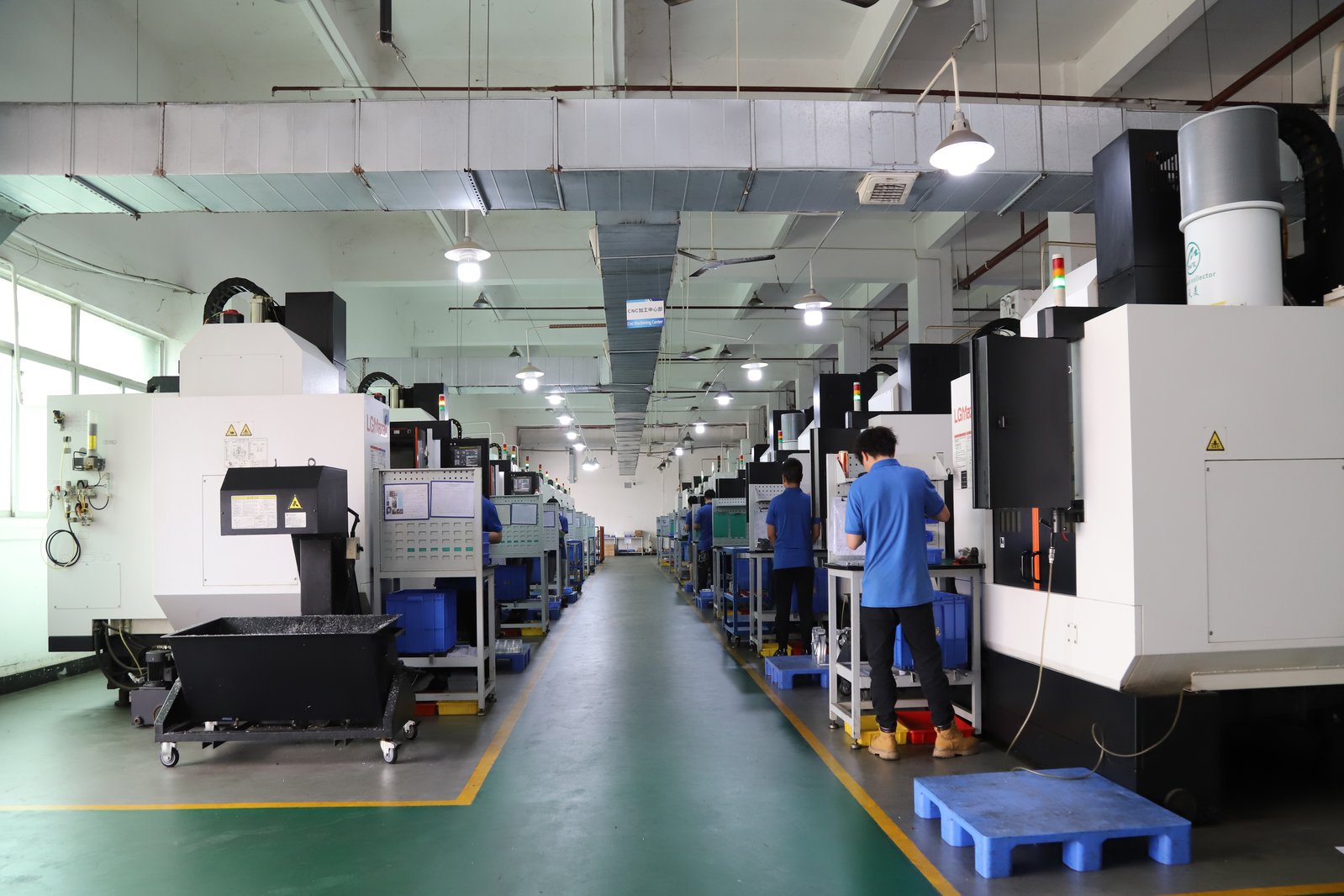
Five-axis parts invert the overseas cost structure of every simpler product. A machined aluminum bracket is cheap and light, so freight dominates and the risk is manageable; a five-axis component is expensive and complex, so freight barely matters, but the risks that replace it are harder to manage at a distance. The capability that made the part can rarely be inspected in person, the surface verification happens on a CMM a continent away, and a failure that on a flat part would mean rework becomes, on a sculpted surface, a total loss with an ocean between you and the re-run. This guide covers five-axis machining services from the overseas buyer's side: how the cost structure inverts, how you verify capability across an ocean without a visit, what surface verification means when the reports travel instead of the parts, why a five-axis failure is disproportionately expensive at distance, and how the program — the order's real asset — is managed across the miles.
How does the overseas cost structure invert for five-axis work?
Every line of the overseas landed-cost model changes character when the part is five-axis work, and the changes all point the same way — toward capability and verification risk replacing logistics as the dominant concern:
- Freight becomes a rounding error. A five-axis component carries the cost of its program, its geometry, and its complexity — the part is valuable enough that freight, duty, and insurance, the lines that dominate cheap-part sourcing, shrink to a small fraction of the landed cost. The overseas model for five-axis work is not a freight model; it is a capability-and-verification model with shipping attached.
- The capability claim is the expensive thing to verify at distance. On commercial work, a buyer can visit, watch a trial, and judge a machine on the floor. Across an ocean, the capability claim — continuous five-axis motion, surface quality, program discipline — must be verified through records, reports, and third parties rather than through eyes. The verification substitutes for the visit, and its cost and reliability decide how much of the distance risk remains.
- The failure economics are already extreme, and distance makes them worse. A sculpted surface that fails is scrap, not rework, and across an ocean, the scrap is followed by a re-run whose material, program, and shipping all repeat across the distance. The failure cost that dominates five-axis sourcing anywhere is amplified by the recovery path's length.
- The program is an asset that must be managed across borders. The order's real value sits in the program — its development, its revisions, its validation — and managing that asset across time zones and cultures is a different discipline from managing a shipment. The program's version control, change communication, and validation records are the order's true logistics.
The buyer-side reframe: an overseas five-axis order is a capability and program transaction with machining attached — the opposite weighting of a commodity-part order. The model that prices it like a freight exercise will misprice exactly where the money is.
How do you verify five-axis capability across an ocean without a visit?
The capability claim is the order's foundation, and at distance it is verified through a stack of evidence that stands in for the site visit:
- Inspection reports from comparable work are the first evidence. A supplier that has machined similar five-axis parts — sculpted surfaces, tight relationships — can show reports with deviation data against models: measured values, not stamps. The comparable-work report is the closest thing to watching the machine, and it travels better than any description.
- Simulation and program records show the process. The supplier's CAM workflow, post-processor identity, and simulation records demonstrate that five-axis work runs as an engineering process rather than as an experiment. The records are reviewable at distance, and their depth predicts the supplier's discipline better than any assurance.
- Machine evidence answers the hardware question. Behind every capability claim sits a machine, and the machine's honesty is shown by three records a visitor would ask to see on the floor: the rotary-axis calibration schedule with its recent results, the geometry verification history from laser or ballbar checks, and the machine list naming the axis configuration that will run the part. Across an ocean those records travel in place of the visitor, and their depth is the measure of whether the claim rests on measured, maintained hardware or on a brochure's adjectives.
- A trial part is the distance audition. A single-part order, or a designed test piece exercising the cross-face and surface relationships the production work needs, is machined and shipped with its full verification — the cheapest way to see the supplier's real output across the ocean, and available to any buyer at MOQ 1.
- Third-party witness adds independence. Where the order's value justifies it, an independent inspection or a witnessed trial at the supplier's location provides the third-party evidence that distance makes valuable — the same mechanism commercial buyers use, applied to a capability that cannot be seen from afar.
The verification principle: at five-axis distance, capability is proven by evidence — comparable reports, process records, machine calibration history, a trial part, and third-party witness where justified — because none of the buyer's eyes are on the floor. A supplier that produces the evidence stack is verifiable at distance; one that offers only assurances is asking the buyer to accept a capability claim no visitor would accept on site.
What does surface verification mean when the CMM is a continent away?
Surface verification is the acceptance event for five-axis work, and across an ocean the verification happens where the parts are, which makes the report the product of the acceptance:
- The report format is specified before the parts exist. The deviation data — point measurements or a scanned deviation map against the model, with the critical regions called out — is defined as a deliverable in the order, because the buyer cannot walk to the CMM and look. A report whose format was not specified is a report whose meaning will be argued across the distance.
- The report travels; the parts stay. Acceptance at distance runs on the documentation: the deviation values against the model, the finish measurements, the certificate of conformance. The buyer reviews the evidence, and the parts ship only when the evidence supports acceptance, which is the reverse of local work, where the parts are inspected on arrival.
- Disputed surfaces have a defined referee before the dispute. Where the buyer reads the deviation data differently from the supplier, the order names the route — an agreed measurement program re-run under defined conditions, a destination-port measurement by an independent party, or a third-party lab comparing both readings against the shared model. The referee is agreed at ordering, because a surface dispute without a referee is a dispute that travels badly.
- Destination verification is the final gate. For critical parts, an independent measurement at the destination — or at a third-party lab near the buyer — confirms the shipped parts against the model, closing the loop that the supplier's report opened. The destination check is the buyer's own eyes on the surface, applied after the voyage.
The acceptance principle: when the CMM is a continent away, the report is the acceptance instrument — specified in format, reviewed before shipment, refereed by a pre-agreed route, and confirmed by destination verification where the part's value justifies it. The order that defines the report like a dimension has made surface acceptance possible at distance; the one that leaves the format open has made it an argument.
Why is a five-axis failure disproportionately expensive at distance?
Five-axis failure modes are the same everywhere — surface scrap, program errors, batch drift — but each one carries an overseas multiplier, because the recovery cycle repeats material, program work, machining, and shipping across the distance. The model prices the multiplication rather than the base event:
- The surface failure is total, and the recovery is long. A sculpted surface that fails is scrap, and across an ocean the scrap is followed by a cycle that repeats everything at distance: new material, program re-validation, machining, verification, and shipping. Where a local failure costs days, an overseas failure costs the full cycle plus the voyage — the recovery path is the multiplier.
- Program-caused failures threaten the batch and the schedule. If the failure came from the program, the same defect will recur until the program is corrected and re-validated, and the correction conversation happens across time zones, extending the delay that a local supplier would absorb in hours.
- The batch strategy is the mitigation. Because the recovery cycle is long, the order structure should carry the mitigation: agreed sampling and inspection points that catch drift before it becomes a whole-batch loss, a buffer in the schedule that absorbs the recovery cycle, and a communication protocol that keeps program corrections moving across the time-zone gap.
- The expected failure cost is the model's largest line. The total-loss event, multiplied by its probability and amplified by the distance recovery, belongs in the sourcing model as the dominant risk line, because it determines how much verification, trial work, and destination checking the order should carry. On five-axis work at distance, the verification that reduces the failure probability is not a cost; it is the purchase that makes the distance acceptable.
The weighting rule: price the five-axis failure as a total loss with a distance recovery cycle, weight it by the probability the supplier's evidence implies, and treat the verification stack — trial parts, specified reports, destination checks — as the mitigation that the recovery length justifies. That is the difference between sourcing five-axis work by price and sourcing it by the cost of being wrong at distance.
How do you manage the program asset across the ocean?
The program is the five-axis order's real asset, and managing it across borders is the discipline that separates successful overseas programs from troubled ones:
- Program and model version control is contractual. The model revision that defines the surfaces is named in the order, and changes are documented, priced, and re-verified as contract events, because on a sculpted part, an unmanaged model change is an unmanaged program change with a surface consequence.
- Change communication is structured for the time zone. Model updates arrive with a change summary — what changed and what features could be affected — so the supplier can scope the program impact without a synchronous conversation. The change summary is the document that makes program revisions manageable across the distance.
- The program's validation history travels with the order. Simulation records, first-article results, and revision history accumulate into the program's file — the evidence that the program running production is the program that was validated. The file is the asset's documentation, and its completeness is what makes the asset auditable across borders.
- Re-runs inherit the validated state. When production repeats, the program re-runs from its validated state — no re-development, no re-argument — which is where the five-axis asset pays its amortization. The supplier that preserves the program state between orders is the supplier whose overseas relationship compounds; one that treats every order as fresh development is discarding the asset the buyer paid to build.
The asset principle: the program is developed once and amortized across the relationship, which makes its version control, change discipline, and validation history the order's true logistics. The overseas buyer who manages the program as the asset it is gets the amortization; the one who treats each order as a fresh transaction pays for the program's development again and again.
What should an overseas five-axis RFQ carry beyond the standard list?
The RFQ is where distance risk is converted into terms, and beyond the standard machining questions an overseas five-axis RFQ should carry six commitments:
- The capability evidence stack. Comparable-work reports with deviation data, simulation and program records, and machine calibration history — named as the evidence that stands in for the site visit.
- The report specification. The surface verification format — deviation data against the model, critical regions, finish measurements — defined before the parts exist, because the buyer cannot walk to the CMM.
- The dispute referee. The route for contested surfaces — agreed measurement program, destination verification, or third-party lab — named at ordering, because a surface dispute without a referee travels badly.
- The model and program version discipline. The revision named, changes documented and priced as program events, and the validation history maintained — the program asset managed as the contract's core.
- The batch and recovery strategy. Sampling and inspection points that catch drift before batch loss, schedule buffer for the recovery cycle, and the communication protocol across time zones.
- The trial part. A single-part order or test piece run to the full verification standard — the distance audition that generates the first real evidence before production commits.
A supplier that prices these six commitments as the normal cost of five-axis work at distance is selling a verified capability with its evidence attached. One that treats them as burdens is offering an unverifiable claim across an ocean, and on five-axis work, where the failure is total and the recovery is long, the unverifiable claim is the most expensive thing the order can buy.
Frequently Asked Questions
Why does freight barely matter on overseas five-axis orders?
Because a five-axis component carries the cost of its program, geometry, and complexity — the part is valuable enough that freight, duty, and insurance shrink to a small fraction of the landed cost. The overseas model for five-axis work is a capability-and-verification model with shipping attached, not a freight model.
How can I verify five-axis capability without visiting the supplier?
Through an evidence stack: inspection reports from comparable work with deviation data, simulation and program records showing the process, machine and calibration history supporting the hardware claim, a trial part run to the full verification standard, and third-party witness where the order's value justifies it. The stack stands in for the site visit.
How is surface verification done when the supplier's CMM is overseas?
Through the report: the deviation data format is specified before the parts exist, the report is reviewed for acceptance before shipment, disputed surfaces go to a referee agreed at ordering, and destination verification by an independent party closes the loop for critical parts. When the CMM is a continent away, the report is the acceptance instrument.
Why is a five-axis failure more expensive overseas than locally?
Because the recovery cycle repeats everything at distance: a sculpted surface that fails is scrap, and the re-run needs new material, program re-validation, machining, verification, and shipping — where a local failure costs days, an overseas failure costs the full cycle plus the voyage. The batch strategy, schedule buffer, and verification stack are the mitigations the recovery length justifies.
How do I manage the program when the supplier is overseas?
As the contract's core asset: the model revision is named in the order, changes arrive with summaries so the program impact can be scoped across time zones, the validation history travels with the program file, and re-runs inherit the validated state. The program is developed once and amortized across the relationship, or paid for again with every fresh transaction.
What is the minimum order quantity for five-axis machined parts?
One piece, and on overseas five-axis work the single part is also the distance audition: it exercises the capability claim, the report format, and the verification stack on one component, generating the first evidence the buyer can trust before a production program commits to the distance.