
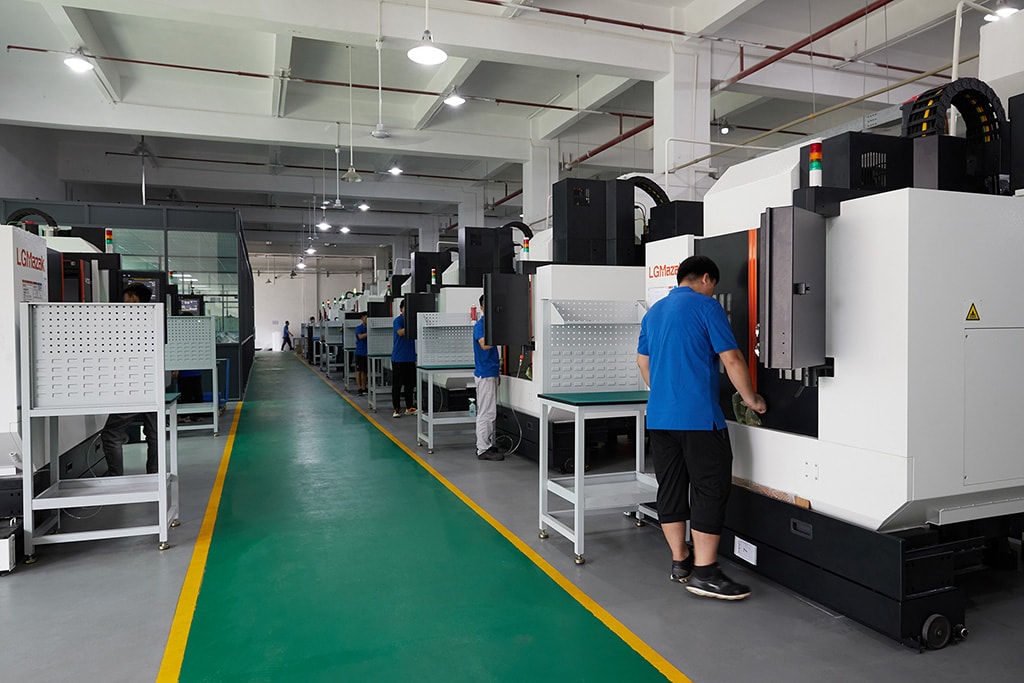
- 100+ machines across milling, turning, mill-turn, and grinding — most parts never leave the building between operations.
- ±0.003 mm milling and turning, ±0.002 mm grinding, verified on Hexagon CMMs.
- ISO 9001, IATF 16949 (product design excluded), ISO 14001 — three documented systems that keep scrap and rework off your bill.
- MOQ 1 piece, lead times of roughly 3 / 7 / 30 days, so you validate before you scale.
1. What do CNC machining services cost you beyond the quote?
The invoice is the smallest line on the true bill. A machining service also costs you the freight and duty on every shipment, the rework on parts that fail your incoming inspection, the expedited second order when a batch runs late, and the hours you spend coordinating multiple shops and chasing status. Add those together and two services with the same unit price can differ by far more than their quoted gap.
The fix is to buy the service on its total cost of ownership, not its unit rate. That means weighing the supplier's process capability — because capability is what keeps defects from migrating downstream — and its lead-time honesty, because a missed date is a cost you pay in idle hours and customer trust. A service you can see clearly is a service you can budget for; the rest is a risk with a price you will discover later.
2. Should you make parts in-house or outsource?
The decision is arithmetic, not intuition. On one side, the fully loaded in-house cost: machine depreciation, tooling, operator labor, inspection, and the floor space the line occupies. On the other, the landed cost of outsourcing: the quoted price plus freight, duty, and the management overhead. The comparison only makes sense when both sides are fully loaded — quoting in-house material and labor without depreciation and inspection flatters the internal option.
Outsourcing tends to win where a specialist runs the process at a capability and overhead your internal line cannot match, and where it removes capital and quality risk from your balance sheet. A specialist floor of 100+ machines running SPC and CMM verification holds a tolerance repeatedly in a way a general-purpose internal line often cannot. If your volume does not keep a dedicated machine and a skilled operator busy, the specialist is usually the cheaper owner of the process.
3. Which processes should one service provider cover?
The value of a broad provider is not convenience — it is that the part does not travel. Every time a part leaves one shop for another, you inherit a new lead time, a new quality system, and a new party to argue with when something fails. A provider that runs milling, turning, mill-turn, and grinding under one roof keeps the part on one accountable floor, so one inspection loop and one invoice answer for the result.
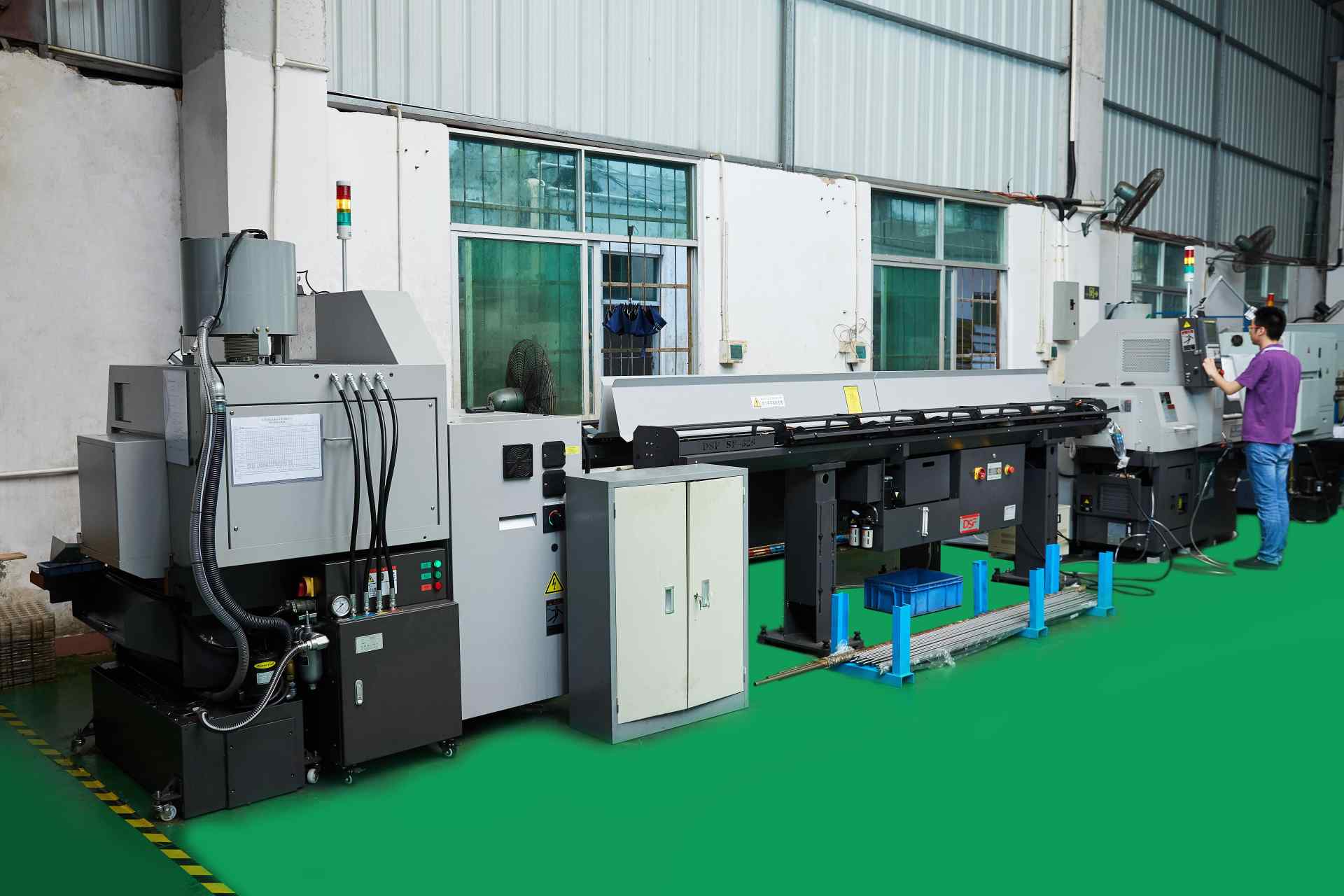
Here the full metal-cutting range runs in-house: 3-axis (50+), 4-axis (20+), and 5-axis (20+) milling for prismatic parts; 25+ lathes for round parts up to Ø720 × 1280 mm; mill-turn centers for single-setup complex geometry; and 7+ grinders for bearing seats and fine finishes. Surface finishing and heat treatment are coordinated with qualified partners and bundled under the same invoice, so you still receive finished parts, not a list of sub-contracts.

4. How does fewer suppliers lower total cost?
Supplier count is a hidden cost line. Each supplier you add brings its own quoting cycle, its own quality variance, its own lead-time uncertainty, and its own share of your procurement time. When a multi-supplier part fails, the cost is not just the rework — it is the forensic work of finding which shop dropped the dimension, and the delay while three parties point at each other.
A single accountable source removes most of that overhead. One supplier means one set of drawings, one inspection standard, one point of contact, and one party that owns the defect when it happens. It also concentrates your volume, which tends to earn better pricing and faster response than spreading small orders across a roster. The fewer suppliers you manage, the less of your own labor you spend managing them, and that labor is part of the service's cost.
5. How do you price a machining service accurately?
Accurate pricing starts with an accurate request. A vague brief — "a machined part, aluminum" — returns a range, not a number, because the machinist has to guess the geometry, the tolerance, and the finish. The same part described precisely returns a firm price a supplier can actually honor.
The package that prices a part correctly is three items: a STEP or IGES model of the geometry, a 2D drawing with tolerances only on the features that matter, and a one-line statement of material, finish, and quantity. Send all three and a machinist can quote a real number; omit any one and the quote becomes an estimate with a built-in contingency. Precise inputs are also the only way to compare two suppliers fairly, because both are pricing the identical part.
6. What does a first article save you?
The first article is the cheapest failure you will ever buy, because it fails on one part instead of a thousand. When you release a production run on an unvalidated process, every defect is multiplied across the batch — a tolerance drift caught at part one costs a scrap bin; caught at part one thousand costs a line stoppage and an air-freight replacement.
A proper first article ships with a measured dimensional report against your drawing, plus the material certificate and the finish you specified. That report is the proof the process can make your part, and it is what makes the production run a reproduction of an approved part rather than a bet. Buy the first article, read the numbers, and only then release volume — the discipline pays for itself the first time it catches a bad setup.
7. How do you compare machining service quotes fairly?
Comparing two machining quotes by the bottom-line number is the most expensive habit in sourcing, because the number omits the risk each supplier carries. The fair comparison adjusts each quote for what the supplier's process will actually deliver: weight the unit price by the expected scrap rate, add the cost of a missed deadline, and add the cost of re-qualifying a replacement if the relationship fails.
Questions that surface the hidden cost in any machining quote:
- Does the quote name the material grade, or just "aluminum"?
- Are secondary operations itemized, or folded into a lump sum?
- Is the lead time a plan you can hold someone to, or a hope?
- Is the tolerance backed by a measured report from a real job?
- Does the supplier flag DFM problems, or agree to everything?
Run those questions and the cheap quote frequently stops looking cheap, because its risk was never priced in. The suppliers that pass are the ones whose total cost you can actually see.
8. What should a machining service quote include?
A quote is a document, not a number, and the difference is where risk hides. A single bottom-line figure with no breakdown tells you nothing about what you are paying for, and nothing about whether the supplier read your drawing. A real quote breaks out at least five things: unit price and the quantity it assumes, material grade, finish and secondary operations as separate line items, tooling or setup where it applies, and lead time plus inspection documentation.
If a supplier cannot break the quote down that way, it has not estimated the part — it has priced a guess. The breakdown is also the single best signal that the shop read your drawing instead of skimming it, because each line item corresponds to a real operation the machinist planned. Insist on the breakdown; it is your window into the cost you are about to commit.
9. How do you pick between milling, turning, and mill-turn for a part?
The process you choose is a cost decision before it is a technical one, because the right process makes the part in fewer setups and the wrong one forces extra operations. The rule of thumb is simple: rotationally symmetric parts belong on a lathe, prismatic parts belong on a mill, and parts that combine the two belong on a mill-turn center that does both in one clamping.
| Process | Best fit | Why it matters to cost |
|---|---|---|
| CNC turning | Shafts, pins, bushings, fittings — parts defined by a centerline | One clamping, fast metal removal, low setup count |
| CNC milling | Housings, brackets, plates, pockets — parts defined by faces and features | Reaches features on multiple faces; 5-axis does it in one setup |
| Mill-turn | Parts with both turned and milled features — a shaft with a milled flat, a housing with a turned bore | Removes the transfer between lathe and mill, and the tolerance error that transfer adds |
| Grinding | Bearing seats, spindles, surfaces that need ±0.002 mm or a fine Ra | The finishing step that makes a tight tolerance repeatable |
Each transfer between machines is a place where a part can be re-clamped, re-indexed, and re-measured, and each re-clamping is a chance to lose position, which shows up as tolerance error and rework. Choosing the process that completes the part in the fewest clampings is not a technical preference; it is how you keep the scrap and rework lines of the total cost small.
10. How do secondary operations and finishing change the landed cost?
A machined part is rarely finished when it leaves the machine. Anodizing, plating, heat treatment, deburring, and marking are separate operations with their own lead times, their own inspection, and their own chance to go wrong, and every one of them is a cost the raw machining price does not cover. The landed cost of a finished part is the machining plus the finishing chain, and a quote that stops at machining is quoting half the part.
There are two ways to buy that chain. You can coordinate it yourself, sending parts to an anodizer and a heat treater you have not audited, and inherit the shipping, the scheduling, and the finger-pointing between them. Or you can let a single accountable supplier bundle the finishing under one invoice, with the partners it has already qualified. The second route removes the re-handling and re-inspection between steps — the exact places where a finished part's cost quietly inflates.
11. What does a prototype-to-production path cost you?
The cheapest way to buy a machined part is to spend the least you can before you know it is right, and then commit. That path runs prototype, then pilot, then production, and the cost discipline at each stage is different. At the prototype stage you are buying information — does the geometry machine, does the tolerance hold, does the finish work — and a one-piece MOQ keeps that information cheap. At the pilot stage you are buying confirmation that the process reproduces at small volume. At production you are buying repeatability at scale.
The trap is skipping a stage. Jumping straight from a drawing to a production run means every design problem is discovered at full volume, where each mistake costs a thousand parts instead of one. A supplier that lets you stage the work — one part, then a small run, then volume — is pricing the path so your learning stays cheap. That staging is not delay; it is the cheapest order in which to buy the part.
Frequently Asked Questions
What do CNC machining services cost beyond the quote?
Beyond the quoted unit price, a machining service costs freight and import duty, rework on parts that fail inspection, expediting when a batch runs late, and the management time of coordinating multiple suppliers. The total cost of ownership is the quote plus all of those, and it is the number you should compare.
Should I make parts in-house or outsource CNC machining?
Compare the fully loaded in-house cost — machine depreciation, tooling, operator labor, and inspection — against the landed cost of outsourcing. Outsourcing wins when a specialist runs the process at higher capability and lower overhead than your internal line, and when it removes capital and quality risk from your balance sheet.
Why does fewer suppliers lower total cost?
Every supplier handoff adds coordination overhead, quality variance, and finger-pointing when something fails. A single accountable floor that runs milling, turning, mill-turn, and grinding removes those handoffs, so one system and one invoice answer for the result and the total cost is easier to see and control.
How do I price a machining service accurately?
Send a STEP or IGES model, a toleranced 2D drawing, and state the material grade, finish, and quantity in the same message. That package lets a machinist return a firm number instead of a range, and it lets you compare two suppliers against the identical part.
What does a first article save you?
A first article with a measured dimensional report is the cheapest failure you can buy, because it catches a problem on one part before you commit a thousand. It confirms the process, the tolerance, and the finish before volume, so the production run reproduces an approved part instead of an assumption.
What should a machining service quote include?
A real quote breaks out unit price and quantity, material grade, finish and secondary operations as separate line items, tooling or setup where it applies, and lead time plus inspection documentation. If a supplier cannot break it down that way, it has priced a guess rather than estimated the part.
What tolerances can your machining services hold?
±0.003 mm for milling and turning, and ±0.002 mm for precision grinding, verified on Hexagon CMMs. Process capability runs Ppk ≥ 1.67 at the initial study on key characteristics and Cpk ≥ 1.33 on general characteristics. Capability is reported per characteristic: every report names the feature, its tolerance band, the sample size, the sigma method, and the study window., with a representative length characteristic measured at Cpk = 1.851.
Read the tolerance band before you read the index. Cpk is a ratio of the tolerance band to the process spread, not an absolute measure of accuracy. The figure above was recorded on a length characteristic with a 0.4 mm band (76.1–76.5 mm) — wide by design. Hold the same process spread against a ±0.005 mm feature and it fails outright. Ask for the band, the subgroup count and the sampling window on every capability number a supplier quotes.
How do I start a machining services engagement?
Email your 3D model and toleranced 2D drawing to [email protected] with material, finish, and quantity. You receive a design-for-manufacturing review and a quote, usually within one business day, with any feature we cannot reliably hold flagged before cutting.
Ready to price your machining on total cost, not unit rate?
Send your drawing to [email protected] or call +86 13126536955 for a DFM review and quote.