
Aluminum CNC Machining Services: The Landed-Cost View of Buying Light, Cheap Parts Across the Ocean
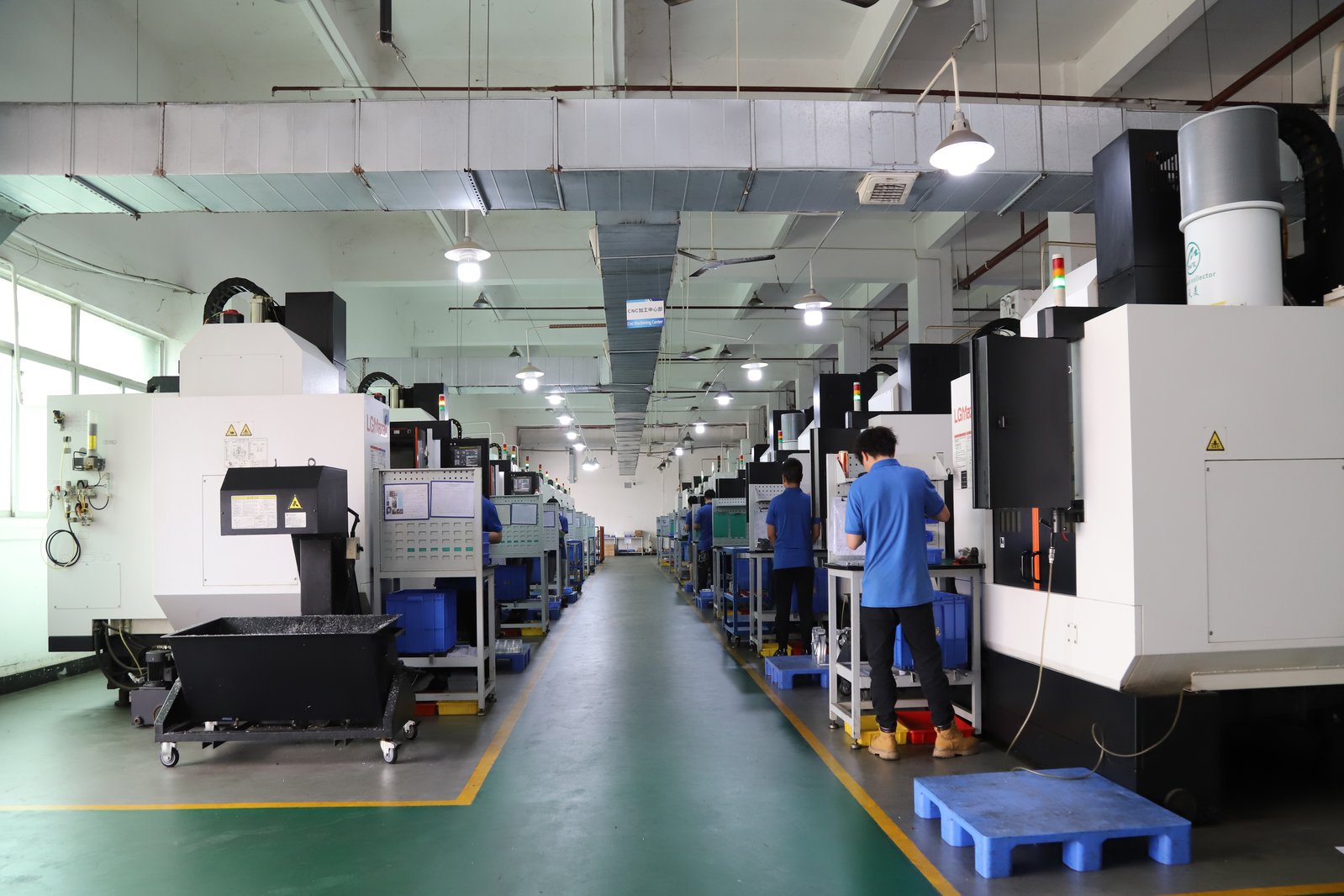
Aluminum parts are the cheapest and lightest things a machine shop makes, and those two facts change the economics of buying them from overseas more than any engineering detail does. A lightweight, low-value part carries freight cost that is large relative to its price, a defective batch is often not worth shipping back, and a landed-cost model that works for steel or titanium — where the part value dominates the logistics — misleads exactly where aluminum is concerned. The overseas aluminum order is a logistics-and-risk decision wearing a machining costume, and the buyer who prices it that way sees what the ex-works quote hides. This guide covers the landed-cost view of aluminum machining services: why overseas aluminum behaves differently, where the landed lines hide, why defective batches are often disposed of rather than returned, how freight economics shape the ordering pattern, and how to run a fair overseas-versus-local comparison.
Why does an overseas aluminum order behave differently from a domestic one?
Every step of the international supply chain costs money, and on aluminum each step takes a proportionally larger bite because the part itself is cheap and light:
- Freight is large relative to the part's value. A kilogram of machined aluminum parts is worth a small fraction of a kilogram of titanium or steel parts, yet it occupies the same space in a shipment and costs the same to move. The freight-to-value ratio on aluminum can reach double digits — a share that would be unthinkable on higher-value metals and that makes the shipping line the first place an aluminum TCO diverges from a steel one.
- The defect economics invert. When a batch of steel or titanium parts fails, the value justifies inspection, rework, or return shipping. When a batch of aluminum parts fails, the return freight can exceed the value of the parts themselves, which changes the rational response from "send it back" to "dispose and replace," and changes the cost of failure accordingly.
- Delivery variance costs more relative to the order. Aluminum parts are often bought in smaller, more frequent orders — because they are cheap enough to order as needed — and small frequent orders are the ones most exposed to delivery variance and its schedule cost. The order pattern that aluminum's low price encourages is the pattern that makes logistics risk most expensive.
The buyer-side reframe: the overseas aluminum order is not a machining transaction with shipping attached; it is a logistics and risk transaction with machining attached. Pricing it that way — freight share, defect disposition, and order pattern all in the model — is the difference between an ex-works price and a cost you can plan around.
What is the real landed cost of an aluminum part, and where do the lines hide?
The landed cost of an overseas aluminum part is the ex-works price plus a stack of lines that each take a large relative bite on cheap, light parts:
- Ocean or air freight. The shipping cost per kilogram, and for lightweight parts, the volumetric weight, since a box of brackets fills space faster than it fills a scale. Freight on aluminum is a line to model, not a quote to accept, because it can rival the machining cost itself.
- Insurance and the delivery terms. The Incoterms decide where the supplier's price stops and the buyer's cost begins, and on a low-value, high-frequency order pattern, the insurance and risk-transfer points matter proportionally more than on a single high-value shipment.
- Duties, clearance, and inland transport. Import duties on aluminum articles, customs clearance fees, and the inland leg from the port to the buyer's door — each a fixed or per-weight cost that lands heavily on a cheap product.
- Buffer stock and expediting. Because overseas delivery variance is real and aluminum orders are small and frequent, buyers carry buffer inventory or pay for expedited recovery, and both are landed-cost lines that a domestic order barely carries.
- Quality-at-distance. Inspecting or contesting parts from another continent costs more than doing it locally — third-party inspection, longer resolution cycles, and the overhead of managing quality across time zones. It belongs in the model as a real line, not an act of faith.
The modeling discipline: list every line the part will actually cross — freight, insurance, duty, inland, buffer, quality-at-distance — and price each against the order pattern. On aluminum, the sum of these lines is often comparable to the ex-works price itself, which is why the ex-works comparison is not a comparison at all.
Why is a defective aluminum batch often disposed of rather than returned?
The return decision on a defective aluminum batch is an economic calculation that usually lands on disposal, and understanding why changes how the failure should be handled:
- Return freight exceeds the part value. Shipping a defective batch back to the supplier costs freight both ways plus the delay, and on aluminum, whose value per kilogram is low, the round-trip freight can exceed the replacement cost of the parts. The economically rational response is not return but replacement: the buyer disposes of or locally recycles the batch, and the supplier re-runs it.
- The remedy shifts from return to documented replacement. Because return is uneconomic, the quality terms matter more on aluminum than the return terms: the supplier's obligation to re-run at its cost, the inspection evidence that proves the defect, and the disposal record that closes the loop. A batch that cannot be economically returned is a batch whose replacement obligation must be contractual.
- Local inspection becomes the quality-at-distance tool. Instead of shipping the batch back for the supplier to inspect, the buyer uses local third-party inspection to document the defect — producing the evidence that triggers the replacement obligation without moving the metal. The inspection cost is a fraction of the return freight, which is why it is the rational first step in any aluminum defect dispute.
The buyer-side rule: on aluminum, assume the return will not happen, and structure the quality terms around replacement and evidence rather than return and repair. The supplier that accepts a documented-replacement obligation is pricing the real economics of the metal; one that insists on return inspection is pricing a process the freight will never justify.
How do freight economics change the ordering pattern?
Freight economics reward consolidation on aluminum more than on any other machined product, and the ordering pattern should follow the freight, not the inventory habit:
- Consolidation beats frequency on cheap parts. Because freight is large relative to part value, combining orders — more parts per shipment, or a shared container with other products — amortizes the shipping line across more value. The aluminum buyer who orders as needed pays the freight penalty every time; the one who consolidates turns freight into a managed cost.
- Volumetric weight favors dense packaging and nested designs. Lightweight parts ship by volume as much as by weight, so packaging density — nested brackets, stacked housings, minimal void space — directly cuts the freight line. Packaging is a cost line on aluminum in a way it is not on denser products, and it deserves design attention.
- The MOQ trade-off shifts. A higher order quantity per shipment lowers the freight-per-part line but raises inventory-carrying cost, and on aluminum the crossover is worth calculating, because the freight line is large enough to move it. The optimal order size is where the freight amortization meets the carrying cost, not where the unit price is lowest.
The ordering habit: on aluminum, price the shipment, not just the part. The order quantity that minimizes freight-per-part plus carrying cost is the economically right order, and it is often larger than the quantity that minimizes the ex-works price, which is one more way the ex-works view misleads.
What does an aluminum supplier's distance do to the total cost that a local one avoids?
The honest overseas-versus-local comparison on aluminum prices the distance itself, because the distance costs are real and specific:
- The price gap is the offsetting line. Overseas machining and material costs are lower, and on aluminum — a commodity metal machined competitively — the gap can be large enough to dominate the model. The comparison's whole question is whether the price gap covers the distance costs.
- The distance costs are the ones above. Freight share, duty and clearance, buffer inventory, expediting exposure, and quality-at-distance — the stack that a local supplier does not impose. On aluminum the stack is proportionally heavier than on higher-value products, which narrows the gap that the price difference must overcome.
- Local has its own hidden lines. A local supplier's higher unit price may buy faster iteration, easier quality resolution, and no buffer, and the model should price those advantages as real lines rather than treating local as a default. The comparison is symmetric: both suppliers carry their own hidden costs, and the model's job is to make both visible.
The decision rule: run the symmetric model — overseas ex-works plus the full distance stack versus local price plus its advantages — and let the total decide. On many aluminum parts the overseas gap wins; on small, frequent, or quality-sensitive orders the local stack shrinks the gap to nothing. The model shows which is which, which is the entire point of the landed-cost view.
How do you run the overseas aluminum comparison fairly?
The comparison runs on the same discipline as any landed-cost model, with the aluminum-specific lines weighted correctly:
- One model, both suppliers, identical assumptions. The overseas quote gets the full distance stack — freight, duty, buffer, quality-at-distance — and the local quote gets its real price plus its own overhead lines. Neither side gets friendlier assumptions, because a comparison with two rulebooks is a preference wearing numbers.
- The freight and consolidation pattern is modeled, not assumed. Both suppliers are scored on the actual ordering pattern — the order quantity, the shipment frequency, and the consolidation opportunities — because the freight line on aluminum changes by a factor depending on how the orders are structured.
- Defect economics are priced the same way for both. The expected cost of a defective batch — replacement under the documented-replacement model for overseas, rework or return for local — is weighted by each supplier's quality history. The defect line is where an overseas supplier with strong quality evidence beats the stereotype, and where a weak one loses the model.
- A trial order is the first data point. At MOQ 1, a single-part order from each candidate tests the real quote, the real communication, the real documentation, and, for the overseas candidate, the real freight and delivery experience that the model's assumptions will otherwise carry.
The closing principle: the overseas aluminum order is won or lost on the landed-cost model, not on the ex-works quote. Model the distance stack, the freight pattern, and the defect economics symmetrically against local, and let the total, not the price, decide which supplier is actually cheaper across the ocean.
How do currency and payment terms add hidden cost to an overseas aluminum order?
The last layer of the overseas aluminum cost structure is financial, and it is proportionally heavier on cheap parts than on expensive ones:
- Currency movement is a real percentage of a low-value order. On a high-value titanium order, a 2 percent currency swing is a rounding error; on a low-value aluminum order, the same swing can approach the order's profit margin. The quote currency and the settlement timing decide who absorbs the movement, and the landed-cost model should price the exposure rather than assume it away. Where the relationship repeats, a shared settlement currency or a simple forward view removes the surprise.
- Payment mechanism costs scale inversely with order size. Wire transfer fees, correspondent bank charges, and the documentation cost of letters of credit are largely fixed per transaction, which makes them proportionally expensive on the small, frequent orders that aluminum's low price encourages. A letter of credit that is rational for a large shipment is a cost burden on a small one; the payment mechanism should match the order size, and the model should carry its cost.
- Payment timing against acceptance is the risk control. On an order too small to justify elaborate instruments, the risk control is sequencing: a deposit that funds material and startup, with the balance tied to documented acceptance — the same structure that protects any order, applied where the value is small enough that dispute costs would otherwise exceed the order itself.
The buyer-side habit: price the financial layer explicitly — currency exposure, payment mechanism cost, and the timing structure — because on aluminum it is a real percentage of the landed cost, and a percentage that the ex-works quote never shows.
Frequently Asked Questions
Why is freight proportionally more expensive on aluminum parts?
Because aluminum parts are cheap and light: a kilogram of machined aluminum is worth a small fraction of a kilogram of steel or titanium, yet occupies the same shipment space and costs the same to move. The freight-to-value ratio on aluminum can reach double digits — a share that makes the shipping line the first place an aluminum landed-cost model diverges from one for higher-value metals.
What lines belong in an overseas aluminum landed-cost model?
Freight (by weight and volumetric weight), insurance and the delivery terms, duties and clearance, inland transport, buffer inventory and expediting exposure, and quality-at-distance — third-party inspection and the overhead of managing quality across time zones. On aluminum these lines often sum to a share comparable to the ex-works price itself.
Should I return a defective aluminum batch to the supplier?
Usually not — the round-trip freight can exceed the replacement value of the parts. The rational structure is documented replacement: local third-party inspection produces the evidence, the supplier re-runs at its cost, and the disposal record closes the loop. The quality terms should reflect this from the start, because a batch that cannot be economically returned is a batch whose replacement obligation must be contractual.
How should freight economics change my ordering pattern?
Toward consolidation: combine orders and shipments to amortize the freight line, pack densely to cut volumetric weight, and calculate the order size where freight amortization meets inventory-carrying cost. On aluminum the economically right order quantity is often larger than the quantity that minimizes the ex-works price — another way the ex-works view misleads.
When does buying aluminum locally beat buying from overseas?
When the distance stack — freight share, duty, buffer inventory, and quality-at-distance — exceeds the overseas price gap. That happens on small, frequent, or quality-sensitive orders where the freight-per-part and the quality-at-distance lines dominate. The symmetric model — overseas ex-works plus the full distance stack versus local price plus its advantages — shows which side wins for a given part and order pattern.
What is the minimum order quantity for aluminum CNC machined parts?
One piece, and for the overseas buyer the single-part order is also the cheapest way to calibrate the landed-cost model: it generates the real freight experience, the real documentation flow, and the first quality data point, before a consolidated ordering pattern commits volume on assumptions about distance.