
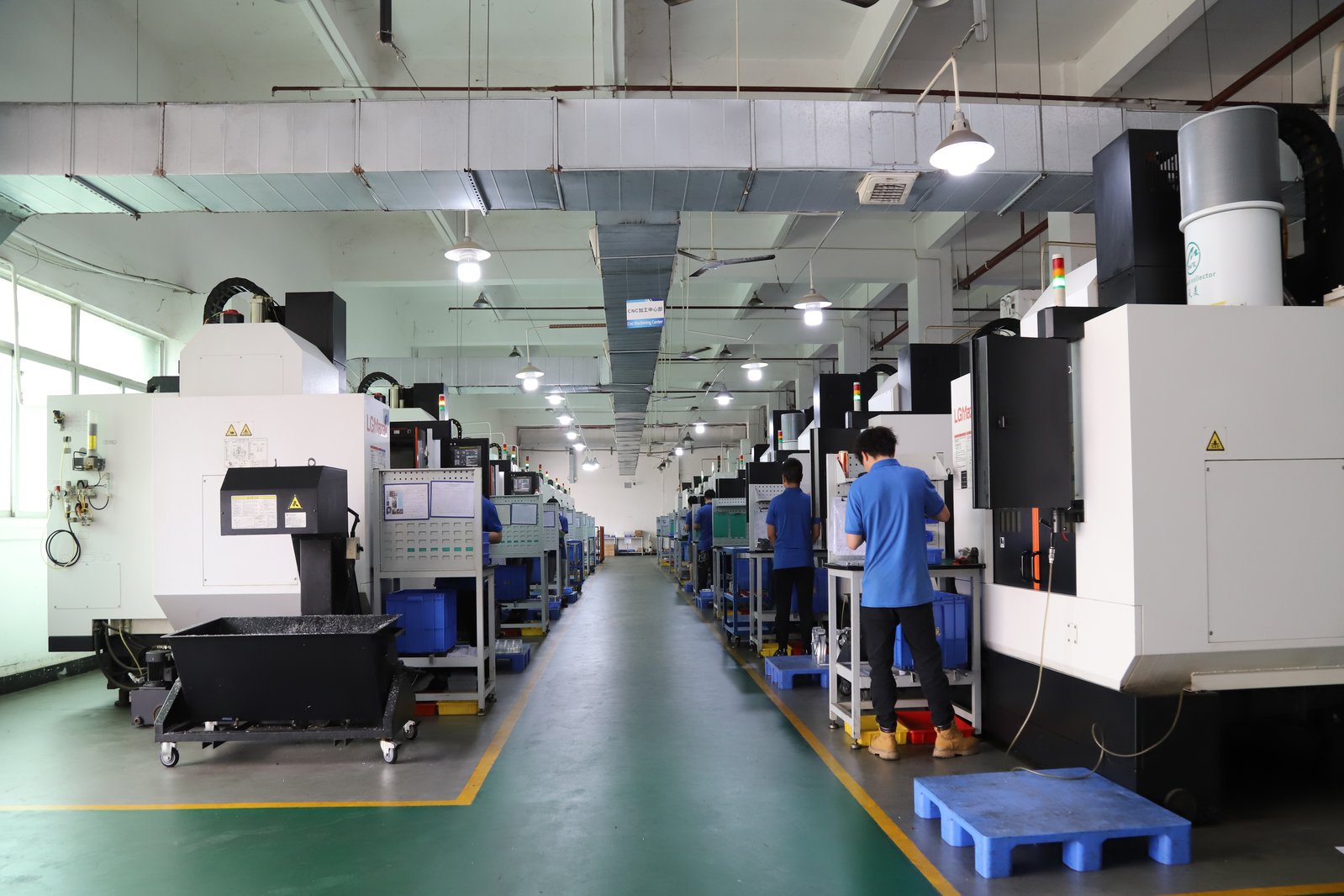
Aluminum and stainless steel carry the majority of machined parts, and choosing between them is the first engineering decision a drawing makes. Both families machine to the same tolerances in a capable shop, so the choice is not about what the process can hold — it is about what the part must survive and what it is allowed to weigh. This guide walks the decision the way a buyer should make it: which requirements point to each family, which grade to name, how the families behave in machining and finishing, and how to verify the part you receive is the material the drawing claims.
What should you settle before choosing the material for a machined part?
Start with the function, not the metal. Write down what the part must survive — the load it carries, the environment it lives in, the temperature it sees, the weight it is allowed — and score each family against those requirements. Weight-critical parts point to aluminum, at roughly a third of steel's density. Parts that need corrosion resistance, strength at a thin section, or temperature capability point to stainless. The environment and the load decide the family, and the drawing's feature set decides how carefully the grade has to behave under the cutter.
Writing the requirements down keeps the decision honest against the cost. Aluminum is the economical answer on material and on cycle time, which makes it the default for parts that do not need stainless properties; stainless is the correct answer where the application demands it. Choosing the cheaper grade when the part needs the other family is not a saving — it is a failure deferred to the first field use. A buyer who scores the requirements first makes the decision once; one who picks by price first makes it again when the part fails.
When does aluminum make the better machined part?
Aluminum wins wherever the application does not demand what stainless provides. It weighs roughly a third of steel, so a bracket, housing, or cover serves weight-critical designs directly. It machines fast, cutting the cost of the features a part carries. It anodizes to a hard, colored, corrosion-resistant surface, and it conducts heat well, which matters in housings and heat sinks. For parts in controlled indoor environments, aluminum is the standard engineering answer.
Aluminum's conditions are real and belong on the drawing. Its strength is about a third of steel's at equal section, so a structural part either thickens its sections or moves to another family. Its corrosion resistance depends on the anodize or conversion coating, which means an uncoated aluminum part in a wet environment is a design waiting to fail. And its softness shows in the details — thin walls flex, small tapped holes strip, and a part cut from plate can distort as residual stress is released. The drawing that names the grade, the temper, and the finish is the drawing that gets the aluminum part it intended.
Stock form sits inside the aluminum decision as well. A part machined from plate inherits the plate's residual stress, which is why the -T651 and -T7351 tempers are specified for thin machined sections and why a thin wall drawn from -T6 plate can move as the material is removed. A part that starts as bar or billet carries its own stress story and is usually cut around its length. Name the form and the temper with the grade — "6061-T651 plate" or "7075-T7351 billet" — because the form decides the distortion risk and the machining plan, and the certificate follows the full callout rather than the short name.
When should stainless win, and what does it cost?
Stainless wins when the service environment or the load rules out aluminum. The corrosion case is the most common — components that see salt, washdown, chemicals, or bodily fluids need the molybdenum-bearing grades such as 316 and 316L. The strength case is next: at a fixed section stainless carries far more load, and 17-4PH extends that to structural duty. The temperature case settles the parts that run hot. Each of those properties is why stainless parts exist, and none of them is negotiable for a lower price.
The cost of the win shows on the quote. Stainless stock costs more and machines slower, with work-hardening punishing a hesitant feed and tooling wearing faster than it does in aluminum. That is not a reason to avoid stainless — it is the price of the property the part needs. The discipline is to choose stainless for the environment or the load, then pick the grade that matches the specific demand: 303 for speed in light duty, 316 for corrosion, 17-4PH for strength. The grade decision completes the stainless decision, and it belongs on the drawing with the family.
The grade also decides the finish the process can hold. 303 cuts with a clean surface because its free-machining additions make the chip break cleanly, while 304 and 316 need the feed and coolant strategy that keeps the surface from tearing on a light cut. 17-4PH machines well in the annealed state and finishes cleanly after aging, which is why it appears on parts that need both strength and surface quality. When the drawing carries a surface-finish callout, the grade and the process must be planned together, because a grade chosen for corrosion alone may not hold the finish the drawing demands without extra process care and a longer cycle.
Which grades belong in the specification, and what does each deliver?
The grade is the second half of the material decision, and on a machined part it is judged by machinability and stability as much as by properties. The table below maps the common grades to the applications they serve.
| Grade | Best for | Machining behavior | Finish pairing |
|---|---|---|---|
| 6061-T6 / -T651 aluminum | General housings, brackets, covers | Fast and stable; the default | Anodize by class, or conversion coating |
| 7075-T6 / -T7351 aluminum | High-strength fittings, thin sections | Slower and costlier; -T7351 holds dimension | Anodize; design out sharp edges |
| 303 stainless | Free-machining parts, light corrosion duty | Fast for stainless; economical | Passivation |
| 304 / 304L stainless | General corrosion-resistant service | Tougher than 303; consistent feed needed | Passivation |
| 316 / 316L stainless | Salt, chemical, food, and medical environments | Slowest standard grade; chip control matters | Passivation; electropolish where required |
| 17-4PH stainless | High-strength structural parts | Machined annealed, aged, then finish-machined | Passivation after aging |
The pattern inside each family is the trade between value and performance. Within aluminum, 6061 is the economy and 7075 the strength; within stainless, 303 is the speed, 316 the protection, and 17-4PH the strength. Name the family for the application and the grade for the specific demand, with the temper and the age condition where they exist, because the certificate and the cutting strategy both follow the full callout. A specification that stops at the family leaves the most important decisions to the shop.
How do the two families machine and finish in practice?
Both families reach the same tolerance bands — milling and turning hold fit and alignment features to ±0.003 mm, with Cpk of 1.67 or higher on key characteristics and Cpk ≥ 1.33 on general characteristics. Capability is reported per characteristic: every report names the feature, its tolerance band, the sample size, the sigma method, and the study window., and precision grinding reaches ±0.002 mm, but the path differs. Aluminum cuts fast with sharp, polished tools and coolant that flushes chips, keeping thin walls and fine detail economical. Stainless needs tough carbide with heat- and adhesion-resistant coatings and a consistent feed so it does not work-harden, and its slower cycles price the machining line higher for the same feature set. Tooling and cooling mirror the material: aluminum forgives aggressive feeds, stainless punishes hesitation.
Process control holds the same band in both families, and the discipline belongs to the shop rather than to the material. The band is identical whether the part is aluminum or stainless; what differs is the effort needed to hold it. A shop that reports measured values for its aluminum parts but treats stainless as a special case is telling you where its process control ends. When you audit a supplier, audit the process control across both families, because the material decision is only as good as the process that holds it, and the process is only as good as the data it reports on every lot. The finish then belongs to the family: anodize or conversion coating on aluminum, passivation and electropolish on stainless, each specified by class on the drawing.
The practical differences surface in the details of the drawing. Tapped holes in aluminum favor forming taps and generous minor diameters, because the soft material strips if the engagement is shallow, while in stainless they want cut threads with good lubrication to avoid galling. A deep pocket in aluminum is a fast clean-out, while in stainless it becomes a chip-evacuation and tool-deflection problem that needs slower passes. A thin wall in aluminum is a distortion problem solved by stock-removal sequencing and a stress-relieved temper, while in stainless it is the same problem with work-hardening added. Each difference is a DFM point the review should flag for the material you named, and each is part of the price and the schedule when the material is chosen.
How do you validate the choice before committing to production?
Validation starts with the specification and flows through the first article. Name the grade with its condition — 6061-T651, 7075-T7351, 316L annealed, 17-4PH in its age condition — because the certificate can only confirm what the drawing names and the machining can only be planned for the state the part will arrive in. Run the DFM review with the material visible so the shop can flag where the grade fights the geometry. When the family choice is genuinely open, machine one part in each and let the application test decide — the cost of two parts is trivial against the cost of choosing wrong at volume.
Keep the decision record with the parts. Note why the family and grade were chosen, what the test confirmed, and whether the choice held. That record is what the production material review will ask for, and it turns the first article from a single part into the documented basis for the volume decision. A material choice validated on the first article and recorded in the lot file survives the transition from prototype to production; one made by habit and undocumented is a risk that follows the program until a failure exposes it.
Cost and batch economics belong in the validation as well. Aluminum is cheaper on the material and the machining lines, and the gap multiplies across a batch, so when the application allows either family, aluminum is the economical answer at every quantity. Stainless adds cost on both lines and spreads widely by grade, from the economical 303 to the tougher 316L and the aged 17-4PH, and that cost is the price of the property the part needs rather than an inefficiency to negotiate away. Compare the two families at the same quantity, because a quote at a tiny batch for one family and at volume for the other compares the batch rather than the material, and let the first-article data settle any genuine debate.
How do you verify the machined part is the grade you specified?
Verification is a two-step chain that runs on every lot. The first step is the certificate: the material certificate names the grade, the condition, and the heat or lot number, and it ships with the parts. The second step is the physical check: the incoming stock is XRF-verified against that certificate before it reaches a machine, so a mixed or mislabeled bar is caught at the door. The certificate is the record, and the XRF check is the proof that the record matches the metal.
The check matters more than it appears, because a part machined beautifully from the wrong grade is a complete failure that looks like a success — it fails the corrosion test, the strength test, or the service environment. When the drawing, the certificate, and the physical material all agree, the material decision is closed, and the part can be trusted to do the job the family was chosen for. The parts guide on this site shows how material, tolerance, and finish land on a quoted part, and the quality page explains how material verification and inspection are handled on every lot.
Frequently Asked Questions
How do I choose between aluminum and stainless for a machined part?
Score the application: weight, load, corrosion, and temperature decide the family. Weight-critical or cost-sensitive parts point to aluminum; parts needing corrosion resistance, strength at a thin section, or temperature capability point to stainless. Both hold the same tolerances.
Which aluminum grades should I consider?
6061-T6 is the general default — fast cutting, stable dimensions, good threads, clean anodize. 7075-T6 and -T7351 step up in strength, with the temper stress-relieved for thin sections. Name the grade with its temper.
Which stainless grades should I consider?
303 is the free-machining grade for lighter corrosion duty; 304 and 304L cover general service; 316 and 316L are the corrosion workhorses; 17-4PH adds strength. The grade's machinability sets the cycle time and the finish it can hold.
Do the two families hold different tolerances?
No — both machine to the same bands: milling and turning hold fit and alignment features to ±0.003 mm, with Cpk of 1.67 or higher, and precision grinding reaches ±0.002 mm. The difference is the effort and cost of holding the band, not the band itself.
Which family handles thin walls and small tapped holes better?
Aluminum machines fast but is soft, so thin walls flex and small tapped holes strip. Stainless is tougher and holds fine features under load, but it cuts slower and work-hardens if the feed hesitates. For fine threads or load-bearing thin walls, stainless is usually the safer choice.
What finish should a machined part carry in each family?
Aluminum parts are anodized by class or conversion-coated where conductivity matters; stainless parts are passivated, with electropolish where a lower finish is needed. The finish belongs to the family, and applying the wrong one protects nothing.
How do I verify a machined part is the grade I specified?
Require the material certificate with the heat or lot number, and confirm the supplier XRF-checks the incoming stock against it before machining. A part machined from the wrong grade fails every test that assumed the right one. The certificate is the record and the incoming check is the proof.
Unsure whether your part should be aluminum or stainless?
Email [email protected] or call +86 13126536955 for a material recommendation tied to the application, with the grade, the finish, and the verification spelled out.