
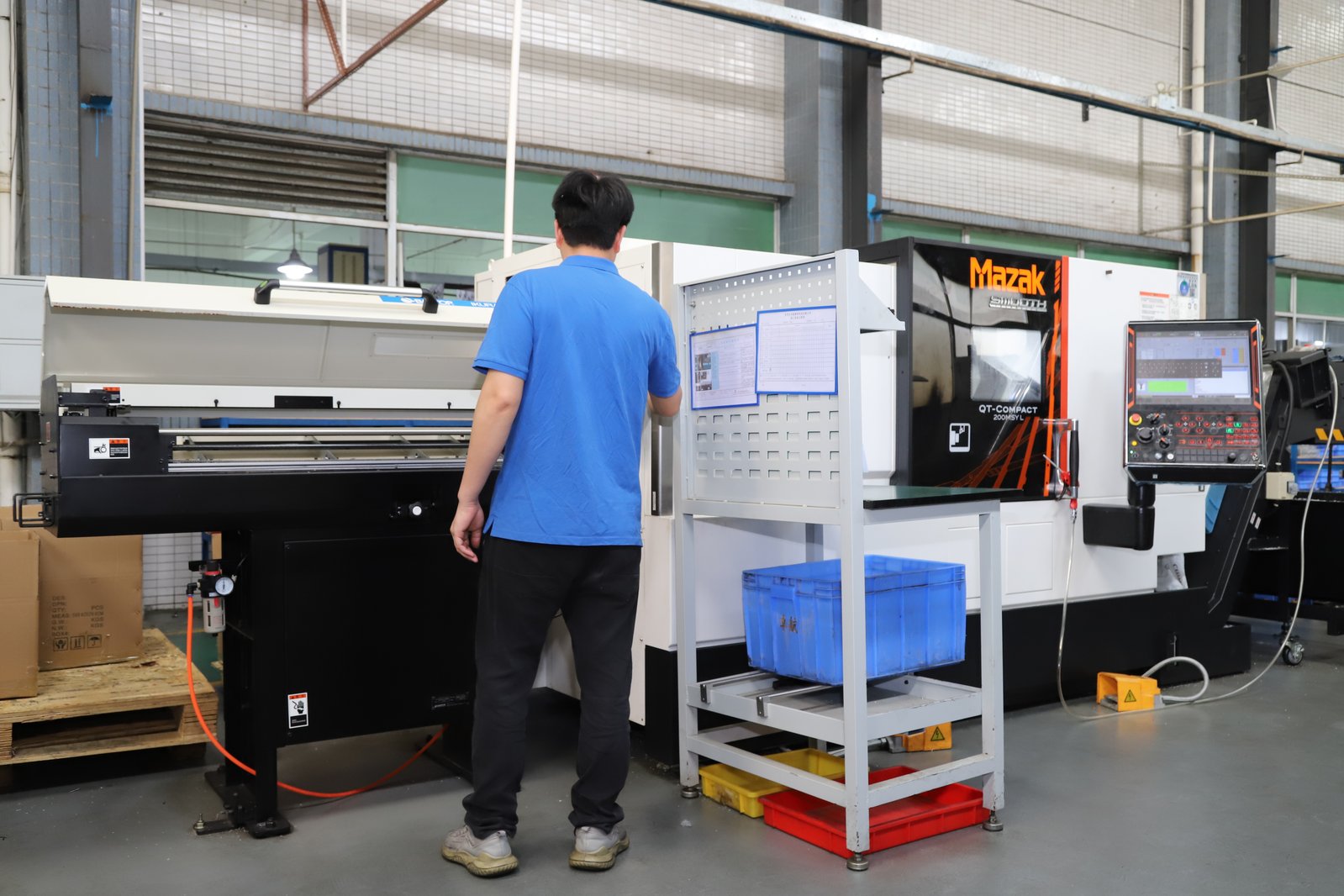
A first order from a new machining supplier carries two purposes, and buyers who see only one of them pay twice. The obvious purpose is to receive parts; the hidden one is to learn whether the supplier can be trusted with volume. The cheapest way to run that second purpose is to design the first order as a paid qualification: a purchase sized and shaped to test the process, the paperwork and the relationship, at a cost proportional to the risk. This guide explains how to design such an order — what part to send, what quantity to buy, what evidence to demand, and what to measure while the order runs.
Why should the first order be treated as a qualification rather than a purchase?
Every claim a supplier makes about its process is unproven until evidence arrives. The brochure describes the machines; the first order produces the first-article report that proves the machines can hold your drawing. The certificate list asserts a quality system; the first lot's paperwork shows whether the system produces the documents you need. The quoted lead time is a promise; the first delivery shows whether the promise survives contact with the real schedule. All of that evidence is collectible on a small order, and none of it is collectible before one.
The buyer who skips the qualification and goes straight to volume is not saving the qualification cost; they are paying it at volume prices. A problem discovered on a small first lot costs a small amount and corrects the next order; the same problem discovered on a volume lot costs the volume lot, the expedite, and possibly the relationship. The discipline is to treat the first order's real product as information, with the parts as a convenient delivery vehicle for it. A buyer who reads the first order that way extracts its value twice: once in parts, once in knowledge.
What should the first order contain to be a real test?
A qualifying order has to exercise the things volume will depend on, which means it should not be the easiest part in your catalogue. Choose a geometry with a few genuinely tight features, so the first-article report has something real to measure; a material that carries a certificate requirement, so the material chain is actually exercised; and a finish that must be documented, so the treatment record is proven on the small lot. An order built from the easiest possible part qualifies the supplier for the easiest possible part, which is not the supplier you are hiring.
The order should also name the inspection package it expects, because the paperwork is part of what is being qualified. Spell out in the purchase order the reports and certificates the lot must carry, in the format your quality system accepts, and treat a first order that arrives with a thin or inconsistent package as a finding rather than a grace. The part tests the machining; the package tests the system; the two together test whether the supplier can run your program the way you need it run. An order that tests both is an order whose result you can act on.
How large should a qualifying first order be?
The quantity question resolves to a balance: large enough that the supplier runs its real production process rather than a special treatment reserved for samples, and small enough that a failure costs you a modest sum. A short run of the actual production part usually strikes that balance, because it exercises the setup, the run and the lot inspection the way volume will. A single prototype proves geometry but not repeatability, and repeatability is what volume depends on; a full volume order is the payment the qualification is meant to earn, not the vehicle for earning it.
The other half of the size decision is what the order is compared against. A qualifying order should be sized so that its first-article report and measured cycle are meaningful inputs to the volume quote — enough parts that the cycle time and the finish results represent a run, not a fluke. If the pilot is too small to produce real process data, the volume quote that follows is still guesswork, and the qualification has not done its job. Size the pilot to inform the volume number, and the small order earns its keep twice.
What should I measure about the supplier during the first order?
Four observations during the pilot predict how a volume program will behave, and the first two test the process. Did the first article match its report — were the measured values real and the features centered, or did the numbers look assembled after the fact? Did the paperwork arrive complete and consistent, with every document naming the same order and heat? The second two test the relationship. Did the delivery hold its promised date, and when something slipped, did the supplier raise it early with a new date, or announce it late with an explanation? Each observation is cheap to make and expensive to miss.
The pattern across those four observations matters more than any single one. A supplier whose first article is clean but whose paperwork is assembled from memory will cost you reconciliation time on every lot. A supplier whose parts arrive late but whose communication is early and honest is a supplier you can plan around, which is more valuable than one who is fast and silent. The pilot is where these patterns show themselves while the relationship is still small, and the buyer who records them rather than just experiencing them has turned a small purchase into a supplier file that the volume decision can be made from.
There is a fifth observation worth making on the pilot, and it is the one that volume programs rarely recover from if it is missed: how the supplier handles a problem it created. Ask during the pilot what would happen if a dimension missed, and then watch what actually happens if one does. A supplier that stops the run, investigates the cause, and corrects the process before proceeding is protecting your program; one that ships the marginal lot and hopes your receiving catches nothing is transferring its problem to your dock. The pilot is the only time you can watch this behavior at small stakes, and the supplier's answer to a real or hypothetical miss is one of the strongest predictors of the whole relationship.
When is a first order a pass, and when is it a fail?
A qualifying order passes when the parts meet the drawing, the report carries genuine measured values, the material chain holds from certificate to parts, and any slip was raised early with a new date rather than discovered late. Those four conditions describe a supplier whose process and communication can carry volume. A first order fails when the parts are right but the paperwork cannot be traced, because your quality system will fight that supplier on every lot; when the parts are wrong and the supplier is surprised, because the process is not under control; or when a delay was known and not shared, because the relationship will be a series of discoveries.
The grading should also be honest about its sample size. One clean first order proves that the supplier can do it once; two clean orders in a row start to prove that the supplier does it consistently, which is the property volume actually depends on. A buyer who promotes a supplier to volume on a single clean pilot is drawing a long conclusion from a short sample; one who runs a second, slightly larger pilot before committing volume is buying insurance with the qualification budget. The ladder from pilot to volume should climb through evidence, and each rung should be slightly larger than the last proof.
What paperwork should a qualifying order demand?
The pilot should demand the same documentation package volume will need, for the simple reason that the format is easier to fix on a small order than a large one. The package starts with the first-article report carrying measured values against the drawing's key characteristics, and it continues with the material certificate and the incoming verification record that ties the stock to the certificate. The dimensional summary on the lot and the certificate of conformity complete it, each naming the order and the heat so the chain can be audited. An order that accepts a thin package on the pilot invites a thin package on every lot that follows.
The format matters as much as the presence of the documents. If your receiving team needs the report in a particular layout, or your quality system requires the certificate to cite a specific standard, the pilot is the place to discover that the supplier's format does not match. Ask for the documents before the parts ship, review them while the parts are in transit, and send the format corrections back on the first order rather than the fifth. The paperwork conversation on a small pilot is a cheap draft of the paperwork conversation that volume would otherwise force under deadline.
How does a good first order set up the volume pricing?
The pilot's real product, as much as its parts, is the calibration of the volume arithmetic. The first-article report and the measured cycle time confirm or correct the assumptions the volume quote was built on: if the part runs slower than the quote assumed, or the finish needs more passes than estimated, the volume price moves now, while the relationship is small and the correction is cheap. If the pilot matches the quote's assumptions, the volume number becomes a number you can commit to rather than a projection you hope repeats.
The pilot also calibrates the softer lines of the cost stack: the scrap rate, the rework the paperwork generates, and the engineering time your team spends reconciling the shipment. A pilot whose parts are clean but whose documents cost your team a day of reconciliation has just priced the real cost of that supplier into your ledger. The quality page on this site explains what a first-article package and a material chain look like, and the factory page shows the floor behind the documents. A first order designed as a qualification, sized to inform the volume quote and measured against the four observations, is the smallest payment that buys the largest amount of certainty about the largest payment still to come.
Finally, keep the qualification's findings on paper so the volume decision is made from a record rather than a memory. A one-page supplier file that records the pilot's date, the parts ordered, the first-article result, the paperwork quality, the delivery performance and the communication pattern becomes the standing reference every later order is checked against. When the supplier's volume performance drifts, the file shows where it started; when a new stakeholder asks why this supplier was chosen, the file answers without a meeting; and when a second supplier is piloted, the same format makes the two comparable. The qualification is only as durable as its record, and a record kept in a file rather than in recollection is what turns a small order into a permanent asset of your sourcing operation. The buyer who closes the pilot by writing its lessons down has finished the qualification; the one who lets the lessons live only in memory has paid for the information twice, once in the order and once in the mistakes the missing record allows. In sourcing, as in machining, the discipline that keeps the record is the discipline that keeps the process, and the record is what survives when the parts have long since been assembled.
Frequently Asked Questions
Why should the first order be treated as a qualification rather than a purchase?
Because a supplier is only proven by evidence, and a small first order is the cheapest way to collect it. The first lot produces the first-article report, the material chain, the delivery behavior and the communication pattern that volume will depend on, at a cost proportional to the risk.
What should the first order contain to be a real test?
A part that exercises the processes you care about — tight features, a material with a certificate requirement, a finish that must be documented — at a quantity large enough for a real run but small enough that failure costs little. The order should also name the inspection package it expects.
How large should a qualifying first order be?
Large enough that the supplier runs its real process, small enough that a problem costs a modest sum. A short run of the production part usually does both. A single prototype proves geometry but not repeatability; full volume is the payment the qualification is meant to earn.
What should I measure about the supplier during the first order?
Whether the first article matched the report, whether the paperwork arrived complete and consistent, whether the delivery held its date, and how the supplier communicated when something slipped. The first two test the process; the last two test the relationship.
When is a first order a pass, and when is it a fail?
It passes when the parts meet the drawing, the report carries real values, the material chain holds, and slips are raised early. It fails when paperwork cannot be traced, parts are wrong and the supplier is surprised, or a delay was known and not shared. One clean order is not proof; two in a row start to be.
What paperwork should a qualifying order demand?
The same package volume needs, produced on the small order so the format is proven: the first-article report with measured values, the material certificate with the incoming verification, the dimensional summary, and the certificate of conformity. A thin package on the pilot invites a thin package on every lot.
How does a good first order set up the volume pricing?
The pilot's measured cycle and first article confirm or correct the volume quote's assumptions. If the part runs slower than quoted, the volume price moves now while the relationship is small; if the pilot matches, the volume number becomes one you can commit to rather than hope repeats.
Ready to design a first order that qualifies us properly?
Email the STEP or IGES model with your toleranced drawing and the inspection package you require to [email protected] or call +86 13126536955, and receive a pilot-sized quote with the report package named.